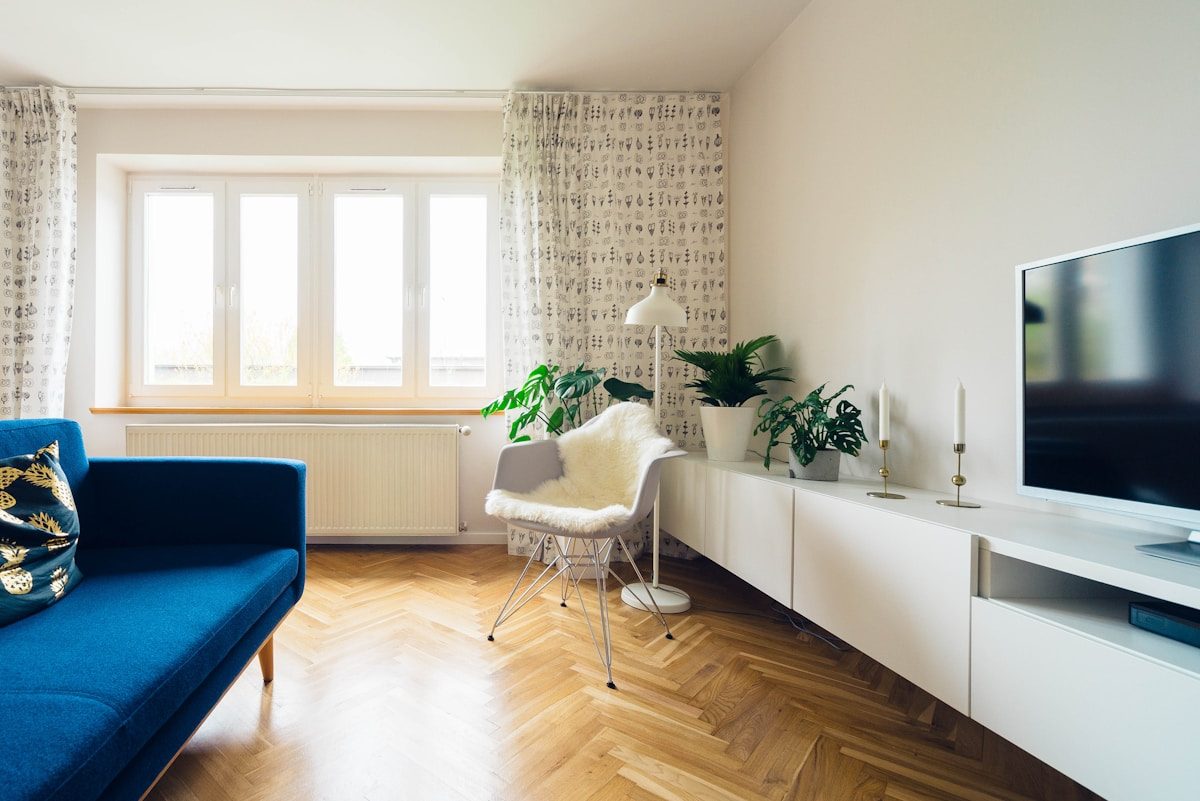
There's a pattern I've watched harden over the past year, and it's worth saying plainly: the homes that sell in the first weekend in Knoxville right now aren't necessarily the biggest, or the most expensive, or the ones with the prettiest views. They're the ones a buyer can move into on day one without writing a check to a contractor.
That's the entire game in this rate environment. Buyers stretched to qualify, down payments emptied out the savings, and there is nothing left over for a kitchen. Understanding that — really understanding it — is the difference between a Saturday-morning offer and sixty days on Zillow with a slow erosion of price.
Why your "small project" reads as a deal-breaker
Picture the average buyer walking through your home. They're pre-approved at $350,000. They've run the numbers a hundred times. They walk into a kitchen with builder-grade cabinets and 2003 laminate counters, and the only question on their mind is: how much is this going to cost me?
The answer, in spring 2026, is "more than I can spend." Every percentage point of mortgage rate trims roughly 10% off a buyer's purchasing power, so the buyer who would have stretched to $400,000 two years ago is now working with significantly less. The math doesn't leave room for fixer-uppers. What this means in practice — whether your home sits in Farragut, Hardin Valley, or Bearden — is that a buyer doesn't politely "factor in an allowance." They mentally inflate the renovation cost, panic, and either walk or come in $30,000 under asking.
The homes that sell in the first weekend aren't always the most expensive. They're the most prepared. Buyers don't have renovation money left after closing.
— Hilary Kilgore
What "move-in ready" actually means right now
Move-in ready doesn't mean pristine. It doesn't mean a gut renovation, and it doesn't mean a new roof unless yours genuinely needs one. It means a buyer can carry their furniture in, sleep there the first night, and not call anyone except a pizza place. In practice, that looks like:
The pre-listing prep that earns its place
Neutral paint, fresh and light — White, warm gray, soft greige. Your accent wall is doing more harm than you think.
Updated kitchen surfaces — Hardware, painted cabinets, refreshed counters. You don't need a remodel; you need the kitchen to read "taken care of."
Clean, serviced systems — HVAC tuned, water heater not ancient. If a buyer's inspector finds a 20-year-old furnace, you'll be writing a $5,000 credit.
Curb appeal that earns the second photo click — Mulch, trimmed shrubs, a clean front door. The first photo online has to make someone set down their coffee.
Decluttered and depersonalized — Pull at least 30% of the furniture out. Family photos go in a box.
Hilary's note
The two cheapest moves you can make are fresh neutral paint and a deep professional clean. Together, $1,500 to $3,000 in most homes. The return in buyer perception is enormous, and I've watched both of them shave two to three weeks off time on market more times than I can count.
Staging stopped being optional
For a long time, staging was a "nice to have" — something sellers did when they really wanted to impress. That's no longer the right framing. The data is settled: nationally, staged homes spend up to 73% less time on market than their unstaged counterparts, and roughly half of sellers' agents report that staging directly reduces days on market. Sale-price increases for staged homes typically run 1% to 10%. On a $310,000 Knoxville home, even a 3% bump is nearly $10,000 back in your pocket.
The mechanism is simple. Photos can show a room. Staging shows how a room lives. The awkward nook becomes a reading corner. The small bedroom becomes a perfectly proportioned guest room. Buyers don't fall in love with empty space — they fall in love with the story of the life they could have there.
Staging is not decorating. It is the deliberate quiet that lets a buyer's imagination do the work.
The pre-listing appraisal nobody talks about
This is the move I wish more sellers used. Before you list, having an independent licensed appraiser put a number on your home does two things at once. It anchors your pricing decision in something defensible — no more guessing how much to push above the comps — and it surfaces every condition issue an appraiser is going to flag for the buyer's lender later. That list is your pre-listing punch list.
In a market where buyers are already looking for reasons to negotiate, walking into the contract with a clean, pre-appraised home is leverage. It signals to the buyer's agent that you've done the work, that you know what your home is worth, and that the deal is unlikely to fall apart at the lender's appraisal. A few hundred dollars now can save you thousands in mid-contract repair credits or a price reduction the second week on market.
Hilary's note
If you do the pre-listing appraisal, share the report with serious buyers proactively. It builds trust, it supports your asking price during negotiations, and it dramatically reduces the odds of a deal collapsing after inspection. Transparency sells in this market. I promise.
· · ·
Putting it together
Sellers who treat move-in ready prep as the price of admission are getting under contract faster, fielding stronger offers, and walking away with more. The ones who list "as-is" hoping a buyer will fall in love anyway are watching their leverage erode every week the sign stays out front. If you're thinking about listing this spring or summer — anywhere in West Knoxville — I'd love to walk through your home and put together the prep plan that fits your situation. That's the part I do best, and the part I most enjoy. Reach out anytime.
Let's Talk
Thinking about listing this spring?
I'll walk through your home with you and put a real prep plan on paper — what to do, what to skip, and what it'll cost. No pressure, no commitment. Same loyal approach.
Thanks — message received.
Hilary will be in touch within a day or two. In the meantime, keep reading.