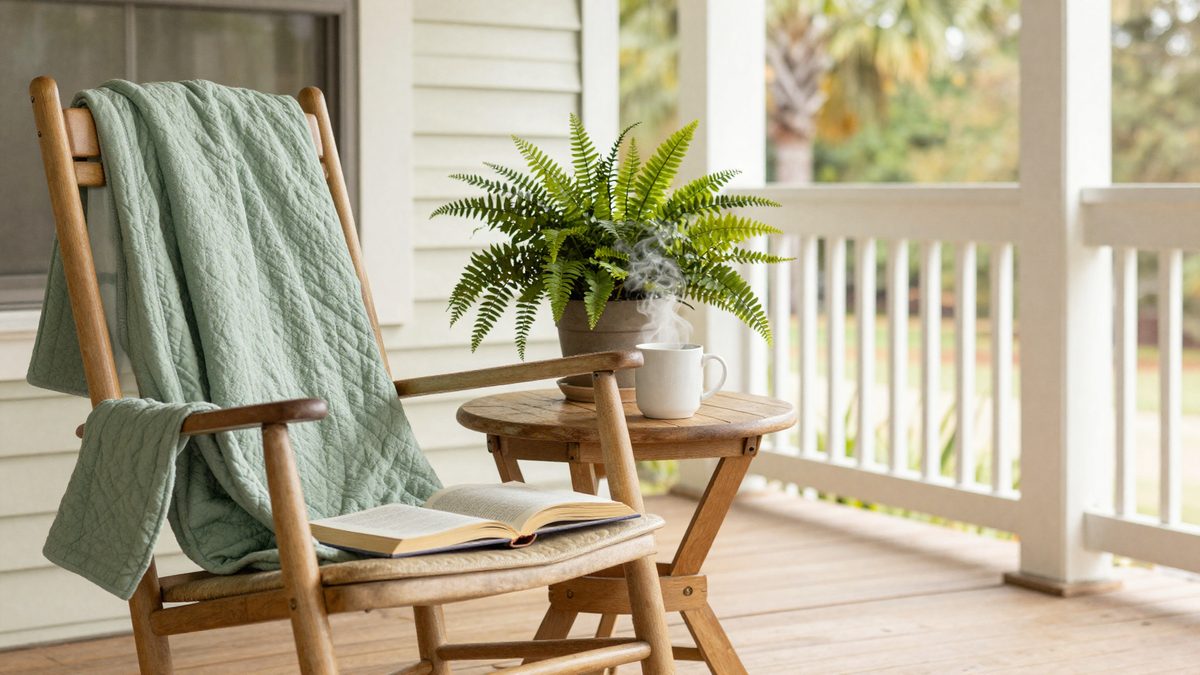
When the kids' rooms have been quiet for a while, the question of downsizing tends to arrive slowly — and then all at once. For most Farragut empty-nesters it isn't really about square footage. It's about matching the house to the life you're actually living now, doing it without an unwelcome tax surprise, and landing somewhere that feels like a step forward rather than a step down. Here's the roadmap I walk clients through.
Downsizing is its own kind of move
Most of the moves I help with are about getting more — more bedrooms, more yard, a better school zone. Downsizing runs the other direction, and that makes it a different kind of decision. The financial mechanics are usually in the homeowner's favor: empty-nesters in Farragut have often been in the same house fifteen or twenty years, the mortgage is small or gone, and the equity is substantial. The hard part is rarely the money. It's deciding what the next chapter actually looks like — and not letting the word "downsizing" make it sound like a loss.
So I try to reframe it from the first conversation. You're not shrinking your life. You're matching the house to it. The four-bedroom colonial was the right tool for raising a family; it is an expensive, high-maintenance tool for two people who travel more and host a little less often than they used to. The goal is a home that costs you less in money, time, and weekend labor — and gives you back the parts of homeownership you still genuinely enjoy.
The right size for the next chapter
When a client asks me how many square feet they should be looking for, I push back on the question. Square footage is a blunt instrument. A thoughtfully designed 2,000-square-foot home on one level can live larger and easier than a chopped-up 3,200-square-foot house with bedrooms nobody enters. The better question is which rooms still earn their place.
I walk clients through three buckets. The rooms you use every single day — the kitchen, the primary suite, the spot where you actually relax. The rooms that hold the family when it gathers — usually a guest room or two, and enough table to seat everyone at Thanksgiving. And the rooms that quietly went dormant years ago — the formal living room, the third and fourth bedrooms, the bonus space over the garage. Downsizing well means protecting the first two buckets and releasing the third without guilt.
Questions to answer before you pick a number
Which rooms did you actually set foot in this past week?
How many people do you need to sleep at once, realistically, on your busiest weekend of the year?
Is single-level living a "nice to have" or a "must have" for the next ten to fifteen years?
How much yard do you want to maintain yourself — and how much would you happily hand to an HOA?
What are you keeping, and what will being honest with yourself about furniture and belongings actually require?
That last one matters more than people expect. The move itself — sorting decades of belongings — is often the real reason a downsizing decision stalls for years. Naming it early, and budgeting real time for it, keeps it from becoming the thing that quietly cancels the whole plan.
· · ·
The tax question — and why most downsizers worry more than they need to
Here's the worry I hear most: "We bought this house for almost nothing in the nineties. If we sell now, won't the IRS take a huge bite of the profit?" It's a fair question, and the honest answer is usually reassuring — but it deserves real numbers from a real professional, not a rule of thumb from your Realtor.
The federal provision that matters here is the Section 121 exclusion. In broad strokes: if a home has been your primary residence for at least two of the five years before you sell, a single filer can generally exclude up to $250,000 of capital gain from federal tax, and a married couple filing jointly can generally exclude up to $500,000. "Gain" is not your sale price — it's roughly the sale price, minus selling costs, minus your adjusted cost basis. And your basis is not just what you paid in 1998; it's that price plus the qualifying improvements you've made over the decades. The kitchen remodel, the new roof, the sunroom, the replaced HVAC system — those raise your basis and shrink your taxable gain.
Exclusion · single filer
up to $250K
Of capital gain, if you qualify — illustrative, confirm with a CPA
Exclusion · married, joint
up to $500K
Of capital gain, if you both qualify — illustrative, confirm with a CPA
Residency test
2 of last 5 yrs
Owned and used as your primary residence — general rule only
The conversation I'd rather you have at a kitchen table with a CPA than guess at alone — the numbers are usually friendlier than the fear.
One more piece worth knowing: if you've also been thinking about what your ongoing costs look like after the move, the property tax picture is its own subject — I wrote a full breakdown in Farragut property taxes, explained. Downsizing usually lowers that line item too, but it's worth running the actual figure on the specific home you're considering.
Hilary's note
I've watched more than one couple put off downsizing for years because they were certain the tax bill would be brutal — and then learned, in a fifteen-minute call with their accountant, that they owed nothing at all. Make that call early. It's the cheapest peace of mind in the whole process.
Patio homes — why smaller doesn't have to mean lesser
When clients picture "downsizing," they often picture a condo, and they often picture a compromise. That's not the only option, and around Farragut it's frequently not the best one. The format that fits most empty-nesters is the patio home: a smaller, low-maintenance home — usually single-level, or close to it — on a compact lot, typically in a community where a homeowners association handles the lawn and the exterior upkeep.
The reason it doesn't feel like a step down is that you're not giving up the things people actually value about a house. In most patio-home communities you still own the home and the land under it, not just the airspace inside the walls. You still have your own front door, your own driveway, your own patch of outdoors. What you give up is the Saturday spent on a riding mower, the gutter cleaning, the fifteen hundred square feet you were heating and cooling for no one. Single-level living, in particular, is the quiet feature that pays off most over the next decade and a half — no stairs to negotiate with a knee replacement, with luggage, or with a basket of laundry.
Low-maintenance doesn't mean low-comfort. The right patio home trades the chores you won't miss for the porch you will.
The fine print is the HOA. Patio-home communities vary widely — some cover lawn care, exterior paint, and even roofs; others cover almost nothing and just enforce appearance rules. The monthly dues, what they actually include, and the association's financial health are all things to read carefully before you fall for a floor plan. A patio home with a well-run association is one of the easiest ways to live in the Farragut area; one with a weak association can hand you back the very headaches you were trying to leave behind. I always read the HOA documents alongside my clients before we write an offer.
You're not giving up the house. You're giving up the chores — and keeping the front door, the porch, and the equity.
— Hilary Kilgore
Timing the two-sided move
Downsizing is almost always a sale and a purchase tangled together, and the order you do them in is a real decision. Selling the family home first gives you a known budget and lets you make a strong, non-contingent offer on the next place — the trade-off is you may need a rent-back from your buyer or a short interim stop. Buying first is easier on the nerves but usually means carrying two homes briefly, or leaning on a bridge loan or your existing equity. There's no universally correct answer; there's only the one that fits your finances and your appetite for moving twice.
What I'll say about Farragut specifically is that well-prepared, well-priced homes here still find buyers without a long wait, which makes a sell-first or simultaneous-close plan more realistic than it would be in a sluggish market. Preparation is the lever you control — and the same things that help any seller apply here. If you haven't seen it, the five biggest mistakes Farragut sellers make is the short version of what I'd want you to avoid before the family home hits the market.
A short checklist before you list the family home
First moves for a Farragut downsizer
Call a CPA or tax professional and ask, specifically, about your Section 121 picture — before you do anything else.
Gather your basis records: the original closing statement, and receipts or records for the major improvements over the years.
Tour two or three patio-home communities early, just to calibrate what your money buys and how the HOAs differ.
Decide your sequencing — sell first, buy first, or simultaneous — with your agent and lender in the same conversation.
Start the sorting now. The belongings, not the house, are usually the real timeline.
Get an honest read on what the family home would bring in today's market, prepared and presented well.
Downsizing done thoughtfully isn't a step down — it's one of the more freeing moves a homeowner can make, and the empty-nest years are a genuinely good time to make it. If you're starting to think about it, I'd be glad to walk your specific situation with you: what your Farragut home would likely bring, which communities fit the life you're describing, and how to sequence the whole thing without a stressful overlap. Reach out whenever you're ready — even if "ready" is still a year or two away. Some of the best downsizing moves start as a quiet conversation long before anything goes on the market.
Frequently Asked
Frequently asked about downsizing in Farragut.
Do I have to pay capital gains tax when I sell my Farragut home?
Maybe — it depends on how much your home gained in value and whether you qualify for the federal Section 121 exclusion. If the home was your primary residence for at least two of the last five years, a single filer can generally exclude up to $250,000 of gain and a married couple filing jointly can generally exclude up to $500,000. Gain is roughly your sale price, minus selling costs, minus your adjusted cost basis — which is your original purchase price plus qualifying improvements over the years. Many empty-nesters who bought decades ago are surprised by how much basis their renovations added, and many fall entirely within the exclusion.
These figures and rules can change, and your situation may have wrinkles. Hilary Kilgore is a REALTOR®, not a CPA or tax attorney, and cannot tell you what you will owe — confirm everything with a tax professional before you list.
What is the Section 121 home sale exclusion?
Section 121 is the part of the federal tax code that lets most homeowners exclude a large portion of the profit on the sale of a primary residence from capital gains tax. As a general rule, you must have owned and lived in the home as your main residence for at least two of the five years before the sale, and you generally cannot have used the exclusion on another home sale within the prior two years. When you qualify, the exclusion is commonly up to $250,000 of gain for a single filer or up to $500,000 for a married couple filing jointly.
The details — partial exclusions, special circumstances, how to calculate basis — are genuinely nuanced, and tax law changes. Hilary is a REALTOR®, not a CPA or tax attorney. Treat this as background only and have a tax professional review your specific numbers.
What is a patio home, and how is it different from a condo or townhouse?
A patio home is typically a smaller, single-level (or primarily single-level) detached or semi-detached home on a compact, low-maintenance lot, often in a community with a homeowners association that handles lawn care and exterior upkeep. Unlike most condos, you usually own the structure and the land it sits on, not just the interior airspace. Unlike a typical townhouse, a patio home is often a single story with no shared interior walls, or just one.
The appeal for empty-nesters is the combination: the privacy and ownership of a house, the single-level living that makes aging in place easier, and an HOA that takes the weekend yard work off your plate. Definitions vary by builder and community, so always read the specific HOA documents and survey before you assume what you are buying.
Should I sell my current home before buying my downsized one?
There is no single right answer — it comes down to your finances and your tolerance for moving twice. Selling first gives you a known number to spend and a strong, non-contingent offer on your next home, but it may mean a short-term rental or a rent-back arrangement in between. Buying first is smoother logistically but usually requires carrying two properties briefly, or using a bridge loan or the equity in your current home.
In the Farragut market, well-priced homes still move quickly, which makes a sell-first or simultaneous-close plan more workable than it would be in a slow market. The right sequence is a conversation to have with your agent and your lender together, before you list or make an offer.
How much smaller should I go when I downsize?
Think in terms of rooms you actually use rather than total square footage. Most empty-nesters do best when they keep the spaces that anchor daily life and the spaces that hold the family when it gathers — a comfortable primary suite, a real kitchen, a guest room or two for visiting kids and grandkids — and let go of the rooms that quietly went unused for years.
For a lot of Farragut downsizers that lands somewhere in the 1,800 to 2,600 square foot range on one main level, but the number matters less than the floor plan. A well-designed smaller home that fits your life feels like an upgrade; a poorly designed one of any size feels like a compromise.
Let's Talk
Thinking about downsizing in Farragut?
Tell me a little about your home and what the next chapter looks like — how many rooms you actually use, whether single-level living is on the list, your rough timeline — and I'll help you map it out. No charge, no obligation. The best downsizing plans start as a quiet conversation, long before anything goes on the market.
Thanks — message received.
Hilary will be in touch within a day or two. In the meantime, keep reading.