Between the accepted offer and the closing table, there's one long afternoon where you learn more about a house than you ever planned to know. Inspection week is where a Farragut deal gets real — and where first-time nerves do their best work. After two decades of standing in driveways while an inspector's flashlight disappears under someone's future home, I can tell you the most useful thing I know: a long report and a bad house are not the same thing.
This is the guide I wish I could hand every buyer the day we go under contract on an older West Knox home. How the week actually works in Tennessee, why the crawlspace gets so much attention out here, what a forty-year-old block foundation is really telling you, and how the repair conversation goes once the report lands. (If you're earlier in the process, start with the seven mistakes I see Farragut first-time buyers make — skipping inspection homework is on that list.)
How inspection week actually works in Tennessee
When your offer is accepted, Tennessee's purchase and sale agreement gives you an inspection period — and here's the part that surprises people: it's a negotiated blank, not a number the state hands down. Around Knoxville you'll commonly see seven to fourteen days, and in a competitive spring it can get trimmed tighter. Inside that window you order the inspection, read the report, and decide what, if anything, you want to ask the seller to address in writing. A written repair list opens a short resolution period for the two sides to land an agreement. Let the window lapse quietly, and you've accepted the house as it sits. The calendar does not care how busy your week was — which is why I book the inspector the same day we go under contract.
The inspection itself is yours: you choose the inspector and you pay for it. Tennessee requires home inspectors to be licensed — ninety hours of training, a national exam, and insurance stand behind the signature on your report — so verifying a license takes one search, and it's worth the thirty seconds. Expect two to four hours on site for most Farragut homes. You don't need to shadow every minute of it; show up for the last forty-five and walk the findings in person while you're both standing in front of them.
Typical cost
$300–$500
General inspection for most Farragut homes. Radon, termite, and sewer scope are separate add-ons.
Time on site
2–4 hours
Plan to be there for the final 45 minutes and walk the findings with your inspector.
Your window
Days, not weeks
The inspection period is negotiated up front — often 7–14 days around here. Book the inspector immediately.
Why every Farragut inspection starts under the house
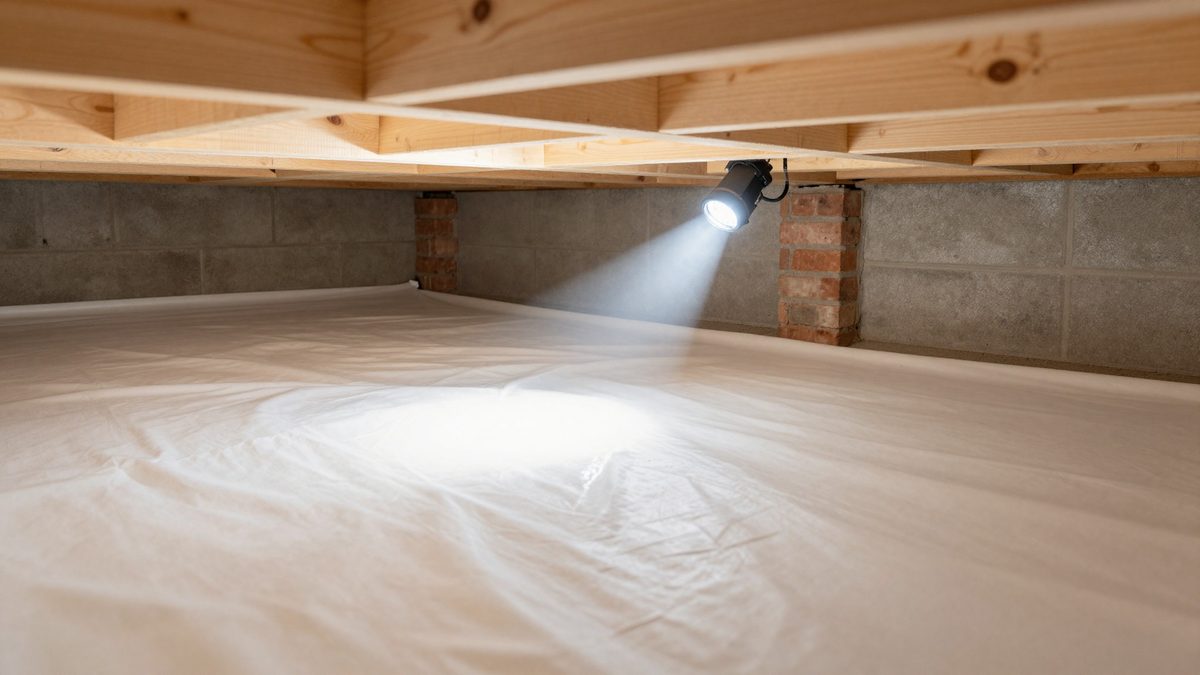
Most of Farragut was built over a crawlspace, and most of those crawlspaces are vented to the outside air — which seemed perfectly sensible in 1978. In an East Tennessee summer, though, vents pull humid outdoor air into a cool, shaded cavity, and the moisture condenses on whatever's coldest: floor joists, ductwork, pipes, the underside of your hardwoods. Give that cycle enough Julys and you get the classics of the local inspection report — surface fungal growth on framing, insulation sagging out of the joist bays, a sweating supply duct, a vapor barrier shredded into ribbons, and a damp low corner where storm water likes to visit.
Here's the calibration that matters: most of it is maintenance, not catastrophe. A fresh vapor barrier and targeted moisture fixes generally run $1,500 to $3,000. Full encapsulation — sealed vents, wall-to-wall liner, a dedicated dehumidifier — is the premium treatment, and locally that runs about $7,000 to $12,000. The findings that deserve real attention are standing water that returns after every rain, active wood-destroying fungus in structural members, and ductwork that's been raining condensation into the insulation all summer. And before anyone sells you the five-figure fix, look outside first: gutters, downspout extensions, and grading that slopes away from the house solve a remarkable share of crawlspace moisture for a few hundred dollars.
The healthy version: dry ground, an intact vapor barrier, and joists you'd be happy to see in any 1970s Farragut crawlspace.
Hilary's note
I've stood at the edge of a lot of Farragut crawlspaces while the flashlight disappeared under the house. The scary-sounding line items are usually the cheap ones — a torn vapor barrier, a disconnected dryer duct. It's the quiet grading problem outside that ends up costing real money.
Reading an older Farragut foundation
Farragut is younger than it feels. The town incorporated in 1980, but the neighborhoods came first — Fox Den's golf-course streets started filling in at the end of the 1960s, Kingsgate's split-foyers went up through the mid-seventies, and Village Green built out through the seventies and eighties. All told, roughly six in ten homes in town date to between 1970 and 1999. Which means the typical Farragut foundation is a concrete-block wall that has been quietly holding up a house for forty or fifty years — and it usually has a few things to say about it.
The language of block walls is cracks, and the two dialects mean very different things. Stair-step cracks that follow the mortar joints diagonally are the common one: they usually record ordinary settlement — different parts of the footing moving fractions of an inch at different speeds over decades. Hairline versions are largely a monitoring item. Horizontal cracks, especially with any inward bowing of the wall, are the dialect you take seriously: that's soil pressing against the wall from outside, and it's a conversation with a structural engineer, not a tube of caulk.
One more layer of local context: West Knox sits on karst — limestone and dolomite that groundwater slowly dissolves — which is why East Tennessee soils move more than newcomers expect. The overwhelming majority of what inspectors flag is slow, old, and manageable. But it's also why my standing advice on any structural question is to spend $300 to $750 on an independent structural engineer's written evaluation before talking to anyone who sells foundation repair. It's the cheapest disinterested opinion in real estate, and it turns a scary unknown into a scoped, priceable fact.
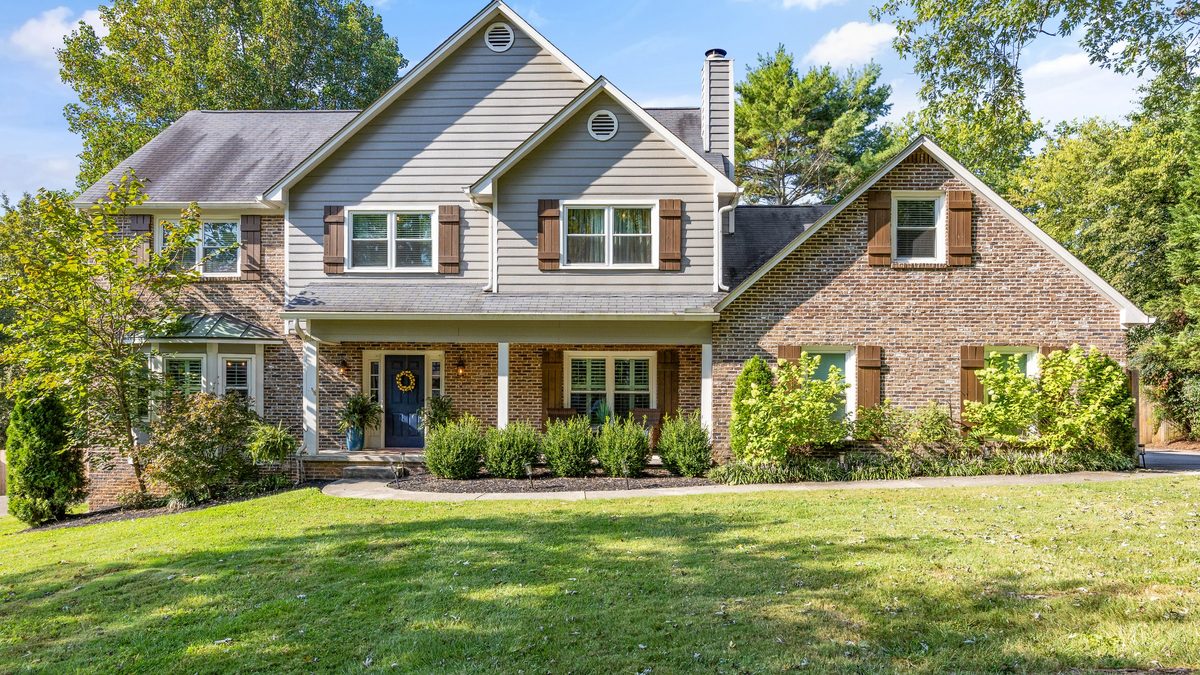
The classic Farragut profile: brick below, siding above, big trees — and underneath it all, a crawlspace and a block foundation doing decades of quiet work.
Zone 1
EPA radon potential, Knox County
6 in 10
Farragut homes built 1970–1999
$300–750
A structural engineer's written opinion
A scary-looking report and a bad house are not the same thing. Most of the time, a long report is just an older house being honest with you.
— Hilary Kilgore
The era watch-list for older Farragut homes
Beyond the crawlspace and the foundation, a handful of findings track the decade the house was built more than the house itself. None of them should scare you off a home you love — every one has a known fix and a known price. But each one deserves a line in your repair math before the resolution period closes:
What shows up, by era
Late 1960s–early '70s: aluminum branch wiring. Used widely from about 1965 to 1973. The issue is connections, not the wire itself — an electrician can retrofit them, and your insurer will want to know.
1960s–'80s: Federal Pacific "Stab-Lok" panels. A breaker box with a documented failure-to-trip history. The standard advice is replacement, roughly a $2,000-ish electrical project, not a re-breakering.
1978–mid-'90s: polybutylene supply lines. Gray plastic pipe that chlorinated water degrades from the inside. Some insurers surcharge or decline it; repipe quotes belong in your negotiation.
Late '80s–'90s: barrier EIFS ("synthetic stucco"). It traps water against wood framing when flashing fails. If the house wears it, order the dedicated EIFS moisture inspection — a general inspection can't see behind it.
Pre-1990: original cast-iron or clay sewer laterals. Tree roots and forty years of use add up. A camera scope costs a couple hundred dollars; the dig it can save you costs five figures.
Any era: original equipment. Water heaters, HVAC, and roofs all carry date stamps. "Working today" and "budget for it" can both be true.
The add-ons worth saying yes to out here
Three boxes I check on almost every older-Farragut contract. Radon: Knox County sits in EPA Zone 1 — the highest radon-potential designation — and enough local tests come back elevated that the $150–$200 test is non-negotiable for me. If it's high, a mitigation system runs $800 to $2,500 and fixes it; elevated radon is a fix, not a dealbreaker. The termite letter: subterranean termites are Tennessee's most destructive wood-feeding insect — UT's extension entomologists like to point out that termites damage more houses each year than fire does. The wood-destroying-insect report runs about $110 to $160, and if you're using a VA loan in Tennessee it isn't optional. The sewer scope: on anything with original pre-'90s drain lines, see the previous section — it's the best couple hundred dollars in the transaction.
The specialists worth knowing (and how locals vet them)
By the end of an older-home purchase in Farragut, you may hear from five different trades: the licensed general inspector who quarterbacks the week, a termite company for the WDI letter, a radon tester (and, if needed, a mitigator), a crawlspace-and-foundation contractor, and — on any structural question — an independent structural engineer. That last distinction is the one locals have learned to respect: the engineer sells you an opinion, the contractor sells you a repair. Buy them in that order.
How the savvy ones vet: confirm the inspector's Tennessee license actually exists; insist on written, itemized scopes instead of lump-sum "stabilization packages"; be politely suspicious of free inspections that end in urgent five-figure quotes; ask who's actually crawling under the house — an employee or a subcontractor; and favor companies with long local mileage on block foundations and karst soils, because West Knox ground has habits that out-of-town playbooks miss. If you want to skip the vetting entirely, ask me — matching people to the right pros is a large share of what I actually do all week.
Hilary's note
My shortlist of inspectors and crawlspace people isn't printed here on purpose — it changes as companies earn their spot or lose it. Text me and I'll send you the current version, with the one-line honest reason each name is on it.
· · ·
After the report: the repair conversation
The report lands — usually that same evening, usually sixty-some pages — and now it's a negotiation, not a verdict. The move is to sort ruthlessly. Material items are structure, water, safety, and the big systems; cosmetic items are everything a Saturday and a caulk gun can handle. Your written repair proposal should be short, material, and specific, because sellers respond to a five-item list backed by an inspector's photos very differently than a thirty-item wish list.
You have three levers, and they trade differently. Repairs get documented in a signed amendment — clean, but you inherit the seller's contractor and timeline. A credit or price adjustment puts you in charge of the fix, done your way after closing, by people you chose. Walking away is the lever you keep in your pocket and hope not to pull — with your earnest money back, if you acted inside your window. Which lever, for which finding, on which house — that's judgment, and it's exactly the conversation I'm there for during those few days.
Here's my honest take, after two decades of these weeks: the buyers who do best in Farragut's older neighborhoods aren't the ones who found a flawless house. They're the ones who understood what the house was telling them, priced it calmly, and asked for the right five things. The house that rattled you on page forty is very often the one you'll still be loving — dry crawlspace and all — when it's time to call me about the next one.
Frequently Asked
Frequently asked about Farragut home inspections
How much does a home inspection cost in Farragut?
For most Farragut homes, a general inspection runs about $300 to $500, with larger square footage at the top of the range. Common add-ons: a radon test ($150–$200), a termite letter (roughly $110–$160), and a sewer-line camera scope for a couple hundred dollars.
How long is the inspection period in a Tennessee contract?
Tennessee's purchase and sale agreement leaves it as a negotiated blank rather than a fixed number — around Knoxville you'll commonly see seven to fourteen days, shorter in competitive situations. If you submit a written repair list, a short resolution period follows for the two sides to reach an agreement. If the window passes with no notice, you've accepted the home as it sits.
Do I really need a radon test in Knox County?
Yes. Knox County sits in EPA Zone 1 — the highest radon-potential designation — and enough local tests come back elevated that the $150–$200 add-on is worth it every time. If a home tests high, a mitigation system typically costs $800–$2,500 and resolves it. Elevated radon is a fix, not a dealbreaker.
Are cracks in an older Farragut foundation a dealbreaker?
Usually not. Stair-step cracks along the mortar joints of a block wall typically point to ordinary settlement. A horizontal crack with inward bowing is the more serious pattern — it suggests soil pressure against the wall. Either way, a structural engineer's written evaluation costs about $300–$750 and gets you a professional answer before anyone quotes you a repair.
Should I attend the home inspection?
Yes — but you don't need to shadow all of it. A thorough inspection takes two to four hours; arrive for the final 30–45 minutes so the inspector can walk you through what they found while you're both standing in front of it. You'll absorb more in that walkthrough than in three readings of the report.
Let's Talk
Buying an older home in Farragut?
I've sat through hundreds of these inspection weeks, and I know which findings are Tuesday-normal and which ones deserve a hard conversation. Tell me where you are in the process and I'll help you read the report like a local.
Thanks — message received.
Hilary will be in touch within a day or two. In the meantime, keep reading.